
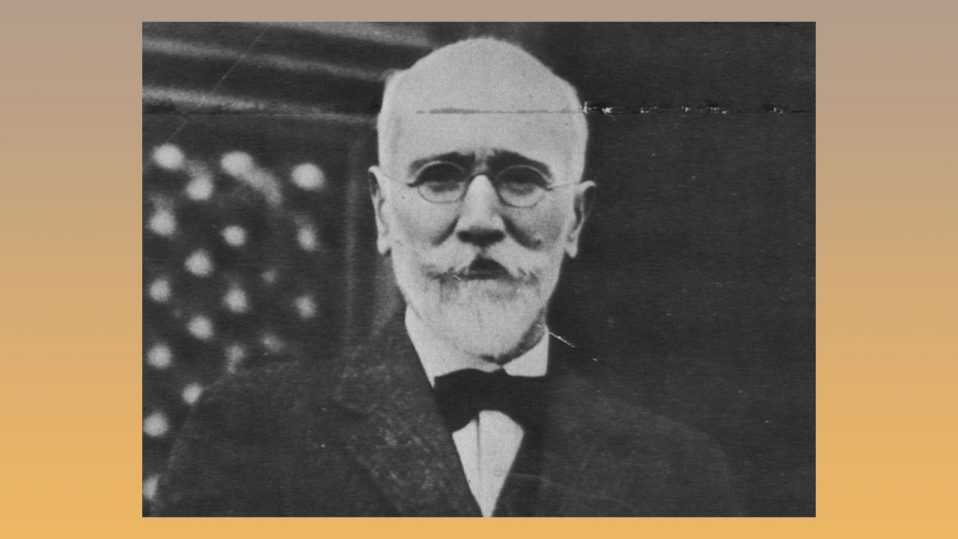
Join us for EMBCA’s “ Ninety Years After Venizelos: The Life, Leadership, and Legacy of Eleftherios Venizelos” webinar panel discussion on Sunday, March 15, 3026 at 2 P.M. EST/ 8 P.M. Athens EEST. The panel discussion will be Introduced and moderated by Lou Katsos EMBCA’s President. The distinguished panel will include Nikos Kastrinakis, President of the World Council of Cretans; Dr. Christopher Lamb, former Deputy Assistant Secretary of Defense, award-winning author and scholar; Author/Writer/Clemson University Lecturer Alexander Billinis; Educator Peter Stavrianidis, PHD.; and Author/ Independent Historical Researcher Stavros Stavridis.
Ninety years after the passing of Eleftherios Venizelos, his name remains inseparable from the making of modern Hellas. For Hellenes in the Hellenic Republic and throughout the diaspora Venizelos represents not merely a political figure, but a transformative era in which the Hellenic state was reshaped territorially, institutionally, and diplomatically.
Born in Ottoman ruled Crete in 1864, Venizelos emerged from the long struggle for autonomy and union with Greece. Trained in law but formed in political conflict, he brought to Athens in 1910 a clear vision of reform and national preparedness. Through the constitutional revision of 1911, military reorganization, administrative modernization, and social reform, he sought to build a stronger, more capable state.
The results became evident during the Balkan Wars of 1912–1913, when Greece nearly doubled its territory and population. Macedonia, Epirus, Crete, and the Aegean islands were incorporated into the kingdom, re shaping the destiny of millions of Hellenes — including many whose descendants would later form vibrant Greek-American communities.
Yet Venizelos’ leadership also coincided with deep division. The First World War produced the National Schism, a rupture between Venizelos and King Constantine I over Greece’s alignment. That conflict left lasting political scars. At the Paris Peace Conference in 1919, however, Venizelos stood at the height of his international stature. He secured territorial gains in Thrace and the mandate over Smyrna, demonstrating his capacity to navigate great power diplomacy and place Greece at the center of European negotiations.
The Asia Minor catastrophe of 1922 altered the course of Hellenic history. Though not in power at its final collapse, Venizelos’ broader strategic vision remains intertwined with that era’s ambitions and consequences. In the years that followed, he showed another side of statesmanship: realism. The 1930 Greek Turkish Friendship Treaty reflected a recognition that consolidation and stability were now essential to national survival.
Venizelos died in exile in Paris in 1936, leaving a legacy both celebrated and debated. He was the reformer who modernized institutions, the strategist who expanded borders, and the international statesman who understood how a small nation could assert itself among powerful states.
For Hellenic Americans, his era carries particular resonance. The territorial changes, migrations, and political transformations of the early twentieth century shaped the very communities that took root in the United States. The Venizelian period helped define the modern Hellenic experience on both sides of the Atlantic.
To reflect on Venizelos ninety years after his passing is not merely to commemorate a leader, but to revisit a defining chapter in the making of modern Greece. His life raises enduring questions about leadership, vision, national unity, and the responsibilities of statesmanship.
Join us for a thoughtful reflection and discussion on this transformative leader of the modern Hellenic nation.

EMBCA is an organization exempt from Federal Income Tax under Internal Revenue (IRC) Section 501(c)(3), classified as a public charity, and qualifies to receive tax deductible bequests, devises, transfers or gifts under Section 2055, 2106, or 2522 . Donors can deduct contributions they make under IRC Section 170. Thank you all again for your continuing enthusiasm and support of our events !!